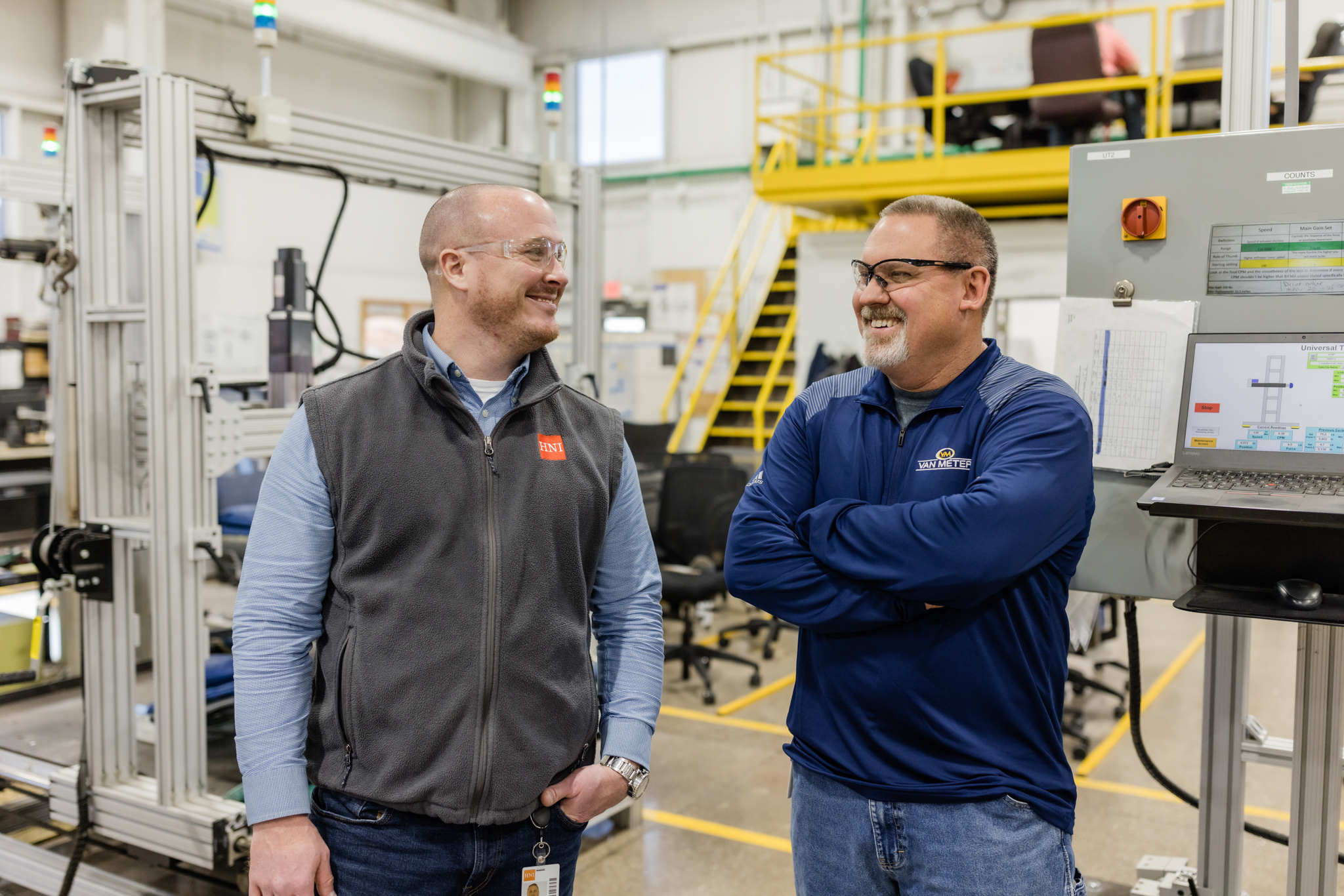
Hands-on training helps manufacturers close skills gaps and build a more capable workforce.
What keeps manufacturers up at night (well, besides third shift)? It’s workforce stats like these:
- Roughly one in five U.S. manufacturers can’t operate at full production capacity due to labor and skill shortages.1
- Nearly a quarter of the manufacturing workforce is 55 or older, signaling an upcoming labor shortage.2
- In Q1 2026, the average manufacturer had 4.1% of positions unfilled.3
Relying on the labor pool alone is no longer enough to solve the growing labor shortage in manufacturing. Staying competitive now requires a smarter approach, one that combines targeted training, workforce development and technology to support the people who keep plants running.
Manufacturers don’t just need more people. They need to get more out of the people they already have.
The first step is understanding where your workforce is most at risk.
What your workforce risk score means
Whether your workforce risk is low, moderate or high, the next step is the same: take action to close gaps, improve consistency and strengthen your team’s performance.
The most effective manufacturers don’t rely on a single solution. They follow a structured approach to workforce development, training and technology to reduce risk and improve output.
Here’s how they do it.
5 Steps to Overcome Labor Shortage in Manufacturing
- Step 1: Identify Workforce Gaps
- Step 2: Build a Training Plan
- Step 3: Amplify People with Technology
- Step 4: Scale Expertise
- Step 5: Measure Results
1. Identify Workforce Gaps with a Training Needs Assessment
First, you need to know where you’re exposed. Assess where retirements, employee turnover or skills gaps are putting production at risk.
Identifying workforce gaps isn’t just a guess. Leading manufacturers use structured assessments to pinpoint exactly where they’re vulnerable.
Workforce and operational assessments help:
- Identify skills gaps across roles and experience levels
- Evaluate workflows for inefficiencies and risk
- Document current processes, knowledge gaps and improvement opportunities
For example, a structured training needs assessment can help manufacturers pinpoint exactly where they’re exposed and where skills gaps are slowing production, while operational assessments highlight where inconsistent processes or undefined troubleshooting practices are slowing production.
New equipment, rising expectations and evolving compliance requirements are adding complexity at the exact moment teams are getting leaner. You can’t fix what you haven’t mapped. This step sets the foundation for everything that follows.
2. Build a Manufacturing Workforce Development Plan
Once you know the gaps, the next step is closing them faster.
New employees take time to reach their full potential, but manufacturers don’t have time to wait as experienced workers retire and roles grow more technical. Manufacturers that shorten time to competency for new hires gain capacity without adding more people.
How do they do it? A modern manufacturing workforce development strategy includes multiple learning paths that help employees build skills faster without slowing production.
- Online training is ideal for onboarding and cross-training between roles. Online classes are self-paced and allow new hires to build foundational knowledge without pulling experienced workers off the plant floor.
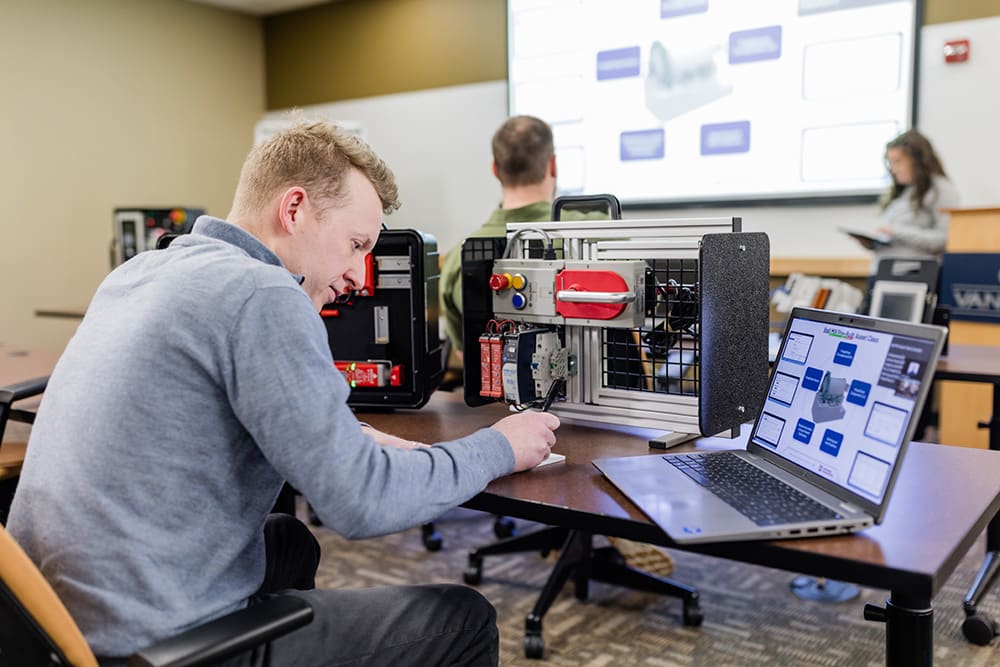
- Classroom training helps workers develop deeper technical skills like PLC programming, VFD configuration, industrial networking and machine safety. Hands-on training with personalized instruction builds confidence to improve consistency and reduce operator error in a real-life setting.
The faster employees gain confidence in their roles, the sooner they deliver real value on the plant floor.
4. Scale Expertise with Connected Workforce Tools
If key knowledge only exists in a few people’s heads, it’s a risk. What happens to production when those people are available or leave the company?
Connected workforce tools and expert support systems make critical knowledge accessible when and where it’s needed. This reduces downtime and improves workforce performance even with limited staff.
On-site and remote automation support services like these help manufacturing teams troubleshoot issues faster, bring new equipment online, improve reliability and maintain uptime
- Van Meter’s Automation Support and Field Services Team is available to provide local automation support on site or via phone or email during regular work hours.
- With a Rockwell Automation TechConnect contract, manufacturers have access to 24/7 Rockwell Automation phone support to talk them through equipment and software installation, configuration, maintenance and troubleshooting.
- A Rockwell Automation Integrated Service Agreement takes support a step further and allows manufacturers to tier support services and outsource the right packaging of solutions to meet their needs. They can choose a package with remote technical support, scheduled maintenance, Learning+ online courses, field services and more.
When operators and technicians can access answers in real time, fewer issues escalate, less-experienced employees perform with confidence and downtime shrinks.
5. Measure Workforce Performance and Optimize Results
The last step is to track what is working and what needs refining.
Measure improvements in uptime, throughput and retention, then define your approach based on what moves the needle.
Today’s top manufacturers aren’t waiting for the labor market to improve. They’re building systems that help smaller teams learn faster, solve problems and get more done.
BIG PICTURE: YOU DON’T NEED MORE PEOPLE TO OVERCOME INDUSTRIAL WORKFORCE CHALLENGES
You don’t need more people to overcome the labor shortage in manufacturing. You need a smarter system that combines workforce development, training and industrial automation services to help your team perform at a higher level.
Talk with a Van Meter specialist to build a plan for multiplying the effectiveness of your workforce, or click below to see Van Meter’s full lineup of industrial automation services.